Friday, September 05, 2008

My piece in the Telegraph about Breidis Prescott.

Saturday, August 16, 2008

18 FRENTE DE LAS FARC, ANTIOQUIA

Noticias Uno emitio algunas de estas imagines hoy en la noche. Aqui esta la entrevista completa.

They used some of this interview on Noticias Uno tonight. Here is the whole thing.

Sunday, August 03, 2008

From an interview with paramilitary commander Ever Veloza (alias "Hernan Hernandez") in El Espectador:
When I was commander in Uraba and he [General Rito Alejo del Río] was commander of the 17th Brigade, I kidnapped two people from inside the Brigade, who had been detained by the army. I took them out of their cell...

How did you kidnap someone from inside an army brigade?

With the complicity of the army. I took them out in a car belonging to the army. We took the prisoners out of the cell, they were from the FARC’s 5th Front…. I went into the Brigade, took them to Buenaventura and disappeared them.

…I moved around as if I owned the place. I went into the army brigade, the police barracks, and did what I wanted…. In Uraba when we started, we left the bodies where we had killed them. After a while, the armed forces started to pressure us: they would let us keep working, but we had to disappear the bodies. And that’s when we started digging mass graves. It started as a request of the armed forces. They said to us, “disappear them and we’ll let you keep working.”

Sunday, July 27, 2008

The Cocaine Trail


Hopefully it will be on at the Amsterdam Film Festival.

Wednesday, July 16, 2008


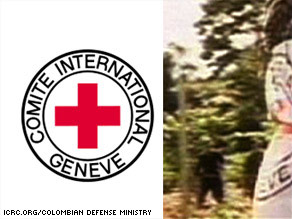
People who don’t want to believe Penhaul’s story still have to explain what this EVE is, if not part of a Red Cross bib?

I've thought long and hard about it and the only thing I have come up with so far is that the guy’s name was STEVE and that, for some reason, he prints this on all his clothing.

Legal question: does this violate the Geneva Conventions?

UPDATE!
Penhaul was 100% right. The hundreds of furious commentators who denounced him in El Tiempo were 100% wrong.

Wednesday, July 09, 2008

THE GREAT INGRID BONANZA

Friday, December 01, 2006

Religious smugglers

The speedboats in this clip, which were loaded with 8.5 tons of cocaine, were covered in pictures of Jesus and the Virgin.


Tuesday, May 16, 2006

GARY BECKER

An interview with Professor Gary Becker, winner of the Nobel Prize for Economics, about the War on Drugs.

What are the problems and costs of the current way of regulating drugs, in the USA and also in Colombia?

Well, the big problem, I think, is that it’s very costly, for reasons I think we understand now. The difficulty is getting any change in US policy, it’s been pretty much the same since Nixon declared the war on drugs thirty or some odd years ago. There may have been some decline in drug use in the United States, but we’re spending an enormous amount, maybe tens or even more than a hundred billion. We’ve made some estimates of the general cost of the war on drugs when you take account of direct spending of police, judicial system, incarceration, and things you can’t measure that well, such as effects on communities and countries. I don’t know as much about other countries except that we’ve been involved, of course, in trying to eradicate some of the sources of drug use in Colombia and elsewhere in Latin America, and now in Afghanistan, and that’s very difficult to do because drugs can be grown in many different parts of the world, not all. It tends to move. I think it’s a losing war.

What’s your proposal exactly?

I think you have to legalize drugs. That will eliminate most of these costs, the incarceration costs, the judiciary costs, the police costs. You’ll be able to reallocate the police to better activities, reduce the effects on neighborhoods, and so on. Critics would say you’ll get a big increase in drug consumption. We estimate the effects, it may be pretty large, but you can always handle that in the way we attack cigarette consumption and alcohol consumption: namely, it’s legalized and we impose a tax and we can then concentrate on reducing the amount of underground activities, which is much easier to do than reducing all activities.

What effect do you think legalization would have on Colombia and the Andean region?

I think it would be a significant improvement for Colombia and these other countries. It may increase the amount of activities that go into drugs, but I think it will greatly weaken the cartels because now this would be more of an open competitive market, so drug cartels would be less important. Now you need cartels to fight the legal system. If it’s legalized, you don’t need it. So if you go back to experience of the war on alcohol, prohibition, in the United States, we had Al Capone and a lot of gangsters involved in that industry, as soon as we legalized it again it pretty much all disappeared. I think it would be a great boon, maybe more important for Colombia and the other countries in that Andean region than even for the United States.

You said in your paper that the “elasticity of demand” of cocaine is 0.5. Could you explain, for non-economists, what this means?

That means that if you increase the price by 10%, you will reduce consumption, after a while, by 5%. It tries to tell you something about the relationship between quantity consumed and the level of the price. It’s important because when that elasticity is low it means every time you increase the war on drugs, by putting more resources into fighting it to try to raise the price of drugs, you get really little effect on quantity, but a big effect on total cost, which is product of quantity and price. That is what we emphasized in our paper.

So suppose Colombia succeeds in eradicating 10% of the coca, what effect would that have on the finances of guerrillas, paramilitaries, drug traffickers, etc.?

It’s a little tricky. First of all it depends how much of that coca shifts to other areas, that will determine how much it affects the price. Let’s suppose, for the sake of our discussion, that you eradicate 10% and you raise the price by 20%: in some sense that makes the cartels and the guerrillas better off, because the price rises by more than the fall in quantity, and if they avoid getting captured, they’re making more profits as a result of that. So in that sense it acts perversely for those who succeed in evading capture. They are doing better, rather than worse than before.

According to the United Nations Office of Drugs and Crime, coca cultivation in Colombia fell from 163,000 hectares in the year 2000, to 80,000 hectares in 2004. This should have caused a massive spike in the price, and yet prices remained low (although they did go up a bit). What do you think is happening?

I don’t know exactly, but what I suspect, and some evidence suggests, is that there is a shift from Colombia to some of the surrounding countries. You have to look at the total effect on coca production, not the effect on Colombia alone. Maybe that effect was pretty small because there are other countries that are good substitutes for production, then we would predict that it would be a small effect, it wouldn’t be a surprise. If total coca production went down that much it would be more surprising, but I doubt very much that’s what happened.

What is your opinion of Plan Colombia, spray-ops, US military aid to Colombia, etc.?

I don’t know how effective the spraying is, and, again, you have to worry about how easy it is shift out of Colombia into the surrounding areas. Therefore you have to distinguish the effect on Colombia and the effect on surrounding areas. You’re hurting the farmers in Colombia if you’re affecting their profitable crops, it depends what they can shift into. And what you’re doing to the criminal element in this, the organized crime element, depends a lot on how much shifting there is into neighboring regions, how powerful they are in these countries, and what happens to price. All our attempts in the past to go into Colombia, be pro-active and cut back things, I think is a strange use of the US military that I’m very uncomfortable with. I don’t think that’s what the US military should be engaging in, in fighting the war on drugs.

Surely, at any given price, demand would be higher in a legal market than in an illegal one? Is that the case?

Well, you say “surely”... it may be true, but you have two forces that go in opposite directions. Law-abiding people, clearly, if it’s legal they’d be more likely to do it. What about teenagers? A lot of drug use is by young people, and they often like to do things that adults don’t want them to do, and so that effect goes in the opposite direction. So the question is what’s the net effect of that? I’m not sure what the answer to that would be. I’d be comfortable with the conclusion that there might be an increase in consumption at any given price. That might be possible, but it’s not logically necessary.

How would a legal market work in practice? Would people buy it in pharmacies, or how would it be distributed?

Look at how liquor has been distributed. Some states, but a declining number, have special stores licensed by the state, sometimes run by the state, that only sell liquor. Other states have pretty much free entry in that market. You can have Walgreens drugstore selling liquor as they do in Illinois and other states, and you have grocery stores selling it. I think that ultimately you’ll end up with something similar to liquor distribution. Maybe initially, because we’re moving into new territory, you’d be restricted to certain outlets, and if the system seemed to be working pretty well we’d then gradually, or quickly extend that, and make it more generally available.

And how would this affect the production side? Would it still be made in jungle laboratories?

No, it would completely alter that. That’s interesting. And I think the alcohol prohibition analogy in this respect is perfect. When it was illegal you had all these illegal stills and so on, criminals producing it. When it became legal you got perfectly legitimate companies involved in it, with their own breweries and the like. And I think you would have that with regard to drugs. And therefore the quality control, the safety of drugs, would be much better because these would be above-ground companies that would be sue-able and responsible for the quality of their products.

And how would legalization affect the price of coca? How would it affect farmers in the Andean region?

It ultimately depends on what happens to demand. If quantity consumed went up, let’s say, as is very likely, that would increase the demand for the crop and therefore would increase the incomes of farmers. The magnitude of that effect depends on a bunch of considerations, but that would be the direction of the effect for sure.

Do you think legalization is likely to happen at some point?

At some point, maybe. I don’t think in the near-term future in the United States (I’ll only speak for the United States, which I know best.) There’s a lot of political opposition among both Liberals and Conservatives, and there’s also support among both Liberals and Conservatives. It’s a very interesting mixture of both the advocates and the opposition, but the opposition is a lot stronger now than the supporters, so I don’t see it happening in the near future. Will it happen eventually? I tend to believe some form of it will happen eventually, as the costs become more apparent. It’s kind of shameful that of the new people going into federal prison, maybe 30% - 40% of them are going in on drug-related charges, mainly not consumption but distribution. A good fraction of these being from minorities, African-Americans and others, and therefore it’s been importantly responsible for the fact that we have over two million people in now prison in the United States, drugs are only part of it, but it’s an important part of it, and that prisons are disproportionately populated by minorities, again, drugs are only part of it, but it’s a significant part of it.

Your colleague Milton Friedman said that the United States is destroying Colombia because the United States cannot enforce its own laws. Do you think that’s fair to say?

Well, I think the United States is hurting Colombia. We can’t enforce it by controlling what comes in, so we try to enforce it by controlling the production. And that, I agree, is a very dangerous step, and it’s definitely had a negative effect on Colombia. But the ultimate negative effect on Colombia is making it illegal. US operations in Colombia add to those effects.

If it weren’t for the drugs trade, do you think there would be peace in Colombia?

To the extent there is ideological opposition, that has gone on in other countries without the drugs trade, but they frequently get financed by the drug trade. So I think, yes, the degree of conflict of that type would go down maybe very significantly.

Why did the crack epidemic end in the United States?

That I don’t know. We just had a paper today, that I wasn’t able to go to, about the crack epidemic. Crack started because it was a cheap way of using cocaine, but as people maybe became more familiar with some of the harmful effects of it, they seem to have shifted away in significant numbers from it. But I don’t know if we know exactly what they’ve shifted into, and what the aggregate is. Total drug consumption has gone down in the United States, there’s no question about that. The real question is whether it has gone down enough to justify the huge expenditures.

What are your main research interests? You write a lot about the economics of crime.

Aside from drugs, you mean? Drugs are only a small part of my interest. I’ve worked on crime; I’ve worked on what we call human capital, that’s investment in people’s education; health; training; I’ve worked on the family a lot, and some of the factors that make for family size, stability of the family, number of children, things of that type.

What were you award the Nobel Prize for?

For extending the boundaries of economics to cover some of these type of topics, such as education, crime, discrimination against minorities, and family. That was the citation.

What are the other main awards you’ve won?

The National Medal of Science. The Clark Medal, given by the American Economic Association to a young economist every two years. Those and the Nobel Prize are the ones I’ve been most proud of.

Do you advise the US government?


In an informal way I have advised the government from time to time. I’m not one of these people who commutes to Washington all the time, but I have given advice to various parts of the government, and I continue to do some of that.

Have you ever traveled to South America?

A number of times. I’ve been to Colombia, I’ve been to Argentina, Chile, Brazil, Venezuela. So, yeah, I’ve been to a number of countries more than once. Uruguay.

How was your trip to Colombia?

Well, I was only in Bogota. It was a number of years ago. I was there giving a talk on training. It was financed by a government agency. I can’t remember the details, it was a number of years ago. So I didn’t get to see a lot of Colombia outside Bogota. But I enjoyed my experience there. We’ve had a number of students from Colombia at the Department of Economics in Chicago, and I was re-united with a few of them. The conference was good. This was probably in the eighties. I enjoyed seeing my former students. In terms of seeing sights, I’m not a big sightseer.

Sunday, April 02, 2006

Nukak Maku


Wednesday, March 15, 2006

BLOQUE NORTE


JORGE 40


Jorge 40


Vicente Castano and Mancuso. Both face US extradition orders.

BLOQUE NORTE HAND IN THEIR WEAPONS

Tuesday, February 28, 2006

BARRANQUILLA CARNIVAL


Saturday, February 04, 2006


Pile of guns. 1,166 men handed in 366 rifles, which begs some obvious questions.

A paramilitary talks to local indigenous people


Local girl with puppy


Police

Friday, February 03, 2006

DEMOBILIZATION OF BLOQUE RESISTENCIA TAYRONA


Dawn in their camp.


42 wounded, some paralysed. This bloc doesn't have any doctors, but they have a physiotherapist. When they get shot they go to a normal hospital and invent some lie.


Hernan Giraldo. He once made the cover of Newsweek -"Colombia's most reclusive drug kingpin... the new Pablo Escobar..." The FARC got him with a grenade in 1984, but after six months he recovered. He claims to have survived three other assassination attempts, the most recent in 2000. He has 25 children.


The length of the speeches was absolutely inhuman, as usual.


Lining up to hand in their weapons.


Getting the document that entitles them to the benefits of the "reinsertion" program. For the next 18 months they receive a monthly payment of 358,000 pesos ($158) from the government.

Wednesday, February 01, 2006

REINA DEL CARNAVAL


Maria Isabel Davila, 23, this year's Queen of the Carnival in Barranquilla.

Friday, January 27, 2006

HAY FESTIVAL CARTAGENA (2)


Vikram Seth


Hanif Kureishi

HAY FESTIVAL CARTAGENA


Hanif Kureishi. In a question-and-answer session someone asked what he thought about Hugo Chavez, Evo Morales and the shift to the left in Latin America. “Well," he said, "I’ve only been in Latin America since yesterday...”


Angela Becerra


Jorge Franco


Enrique Villa-Matas


Hayden Warren-Gash, the British Ambassador to Colombia

Wednesday, December 21, 2005


La Sierra


The front-line between what was the ELN-controlled neighbourhood and La Sierra.


House destroyed by the fighting.


Edison's father and son.


Fading Bloque Metro graffiti


Jesus and photo of Edison.


Swastika tattoo.

Wednesday, December 14, 2005

Tuesday, December 13, 2005

The sixteen strategems for trafficking cocaine used by the Cali cartel:

1. Inside planks of mahogany. They looked at export statistics and discovered that one of Colombia's biggest exports was mahogany. Gilberto Rodriguez Orejuela went to the port of Buenaventura to study the trade. The timber goes in bundles of fifteen or twenty planks, and a plank is about 3 inches thick. They would place the "merchandise" in three holes along the plank, then seal it shut with powerful glue. The cocaine was flown to a secret airfield in Honduras, where the "carpentry" was done, then the wood was sent to Miami and New York. "There were approximately six such shipments of different quantities, and in the this way I managed to export 1,600 kilos."

2. Inside posts of cement. In 1990 and 1991 they sent cocaine via Venezuela in this way. There were three dispatches, each containing 200 or 300 kilos. In August 1991 US authorities intercepted a shipment.

3. In small bags of coffee. On three occasions in 1992 and 1993 they sent cocaine by sea from the port of Buenaventura in Colombia to Miami via Panama. The "owner of the route" was a Cuban-American called Jorge Lopez who constantly sent coffee this way, without drugs. "In each voyage I sent 300 or 400 kilos for a total of 800 or 900 kilos... the last shipment was intercepted by US authorities in August of 1993."

4. In door frames from Honduras. On about six occasions from 1984 cocaine was sent in this way to a company in Miami. A total of 650 kilos reached the US in this way.

5. In containers of broccoli and melon.From 1987 they sent cocaine from Colombia to Guatemala using secret airfields, then to Miami in refrigerated containers containing melon and broccoli. "We did fifteen or sixteen trips in which I sent 100 or 200 kilos for a total of about 1,200 kilos... the last two trips in 1992 were intercepted by US authorities."

6. In boxes of tiles. In April 1992 the brothers sent cocaine to Miami, via Panama, hidden in boxes of tiles to a company called Celeste Internacional. "The owner of Celeste Internacional was completely innocent, or blind, as they say, and was unaware what was going on behind his back."

7. In containers of insecticide belong to Dupont. They made two shipments between 1982 and 1984 from the port of Barranquilla, on Colombia's Caribbean coast, hidden in a shipment of extremely toxic insecticide. They sent 100 kilos each time, the second of which was intercepted. "Afterwards the owner of the route told me that not only had the merchandise been lost, but that they had started legal proceedings in the US, and detained several people.

8. Disguised as coal. In 1992 or 1993 they sent two shipments to "the Republic of Holland", 500 kilos each time. They mixed rocks of fake coal, containing cocaine, in with a shipment of real coal. "I don't know what the material was, but it looked identical to natural coal," said Gilberto.

9. "Cocaine that rains from heaven." From January 1993 until April or May of the same year, cocaine was dropped into the Caribbean, then picked up by a boat and taken to Florida. The shipment was 500 kilos, of which 200 kilos belonged to Gilberto Rodriguez Orejuela. This shipment was intercepted by authorities in Miami, who had informers infiltrated in the gang.

10. Inside a machine for making toilet paper. The machine was called "Yankee Dryer". The machine was sent to Venezuela, then by sea to a company in New York. "The merchandise was hidden in a double bottom in the drying cylinder, a steel cylinder 3.5m in diameter. The machine went to New York on the pretext of repairing it, with the aim of re-exporting it to Colombia. I sent 250 kilos."

11. In drums of castor oil. On four or five occasions they sent 50-kilo shipments of cocaine to the United States and "the republic of Canada", inside drums of castor oil. The drums had a double wall, and cocaine was hidden in the cavity. Canadian authorities intercepted the final shipment, and made several arrests.

12. In coffee grinding machines. Between 1992 and 1994, 200 kilos of cocaine was sent to Guatemala hidden in the machines, then to Houston.

13. In frozen lobsters. "In 1995 I sent 100 kilos to Ecuador to be re-exported to Miami in containers of lobsters.... in December of 1994 I collaborated with a "Mr Ricky" to send cocaine from Cartagena to Mexico, then on to Houston.... Using this method I managed to smuggle about 150 kilos, and the rest was lost.

14. In containers of vegetables. Towards the end of 1987 they sent cocaine in light aircraft to Guatemala, then to the United States hidden in containers of vegetables. Each shipment contained about 300 kilos.

15. In ceramics. 500 kilos of cocaine was sent to Panama, with the idea sending it to Miami hidden inside ceramics. But the cocaine was captured in Panama City.

16. From Mexico in various ways. Between December 1993 and the first months of 1994, about 14 tonnes of cocaine was sent to some Mexican traffickers who sent it on to Houston or Los Angeles. "But due to secrecy and prudence we aren't sure what method they used."

From The Secret Confessions by the Rodriguez Orejuela brothers. The book is a series of interviews with Colombian prosecutors.


Dora Luz Guerra (19) joined the guerrillas when she was twelve, and spent seven years with the 9th Front of the FARC. She left because of "bad treatment". Shemet Milciades Pertus (23) two months ago in a hostel for demobilized fighters, and last month they got married. Milciades was in the AUC's Bloque Centauros.

They are living together in Medellin.


1,924 paramilitaries from the AUC’s Bloque Central Bolivar surrendered their weapons and two of their six helicopters on Monday, in a ceremony in north east of Antioquia. The bloc was perhaps the most powerful in the AUC, and key to the organisation’s structure and finances.

Commander Julian Bolivar, one of the richest men in the organisation, told the Daily Journal, “From today I’m a civilian. I’m going to work for peace.” He will keep the fortune he acquired from drugs and stolen gasoline, and is unlikely to spend any time in jail. Under the “Law of Justice and Peace” commanders are supposed to turn over illegally acquired assets, but Human Rights Watch describes the law as “toothless”. “Even if members are later found to have withheld most of the illegal wealth, they can keep their sentence reductions.”

The ceremony was marred by a collapse in discipline from the ex-combatants, who fired shots in the air and ignored repeated calls for calm from the podium. There have been dozens of such ceremonies in the AUC’s “peace process”, but the first that had descended into chaos. Uniforms and webbing were burnt, but no one had thought to remove the munitions from pockets, and a grenade exploded about 15 metres from where the Daily Journal’s correspondent was sitting. Commander Pastora, a former guerrilla leader in Nicaragua, attended the ceremony as an observer. He told the Daily Journal he was shocked by the lack of order, and the way people were throwing weapons around. “In the guerrillas it was a punishable offense to mistreat a rifle.”

Central Bolivar was one of the AUC’s main “narco blocs”. Over the last few to years they have taken control of the organisation to the extent that many people now regard it as more or less a drugs cartel. Commanders who had tried to distance themselves from the drugs trade, such Carlos Castaño and Rodrigo “Double Zero” disappeared or were killed.

The commander known as “Macaco” said, “I trust that the national government will keep this area free of guerrilla presence… I ask the whole country for pardon for the damage I may have caused over these years.”

(for The Daily Journal)


Monday, December 12, 2005

From November, an interview with Dr Theodore Dalrymple about the Paris riots (for El Espectador)

-You’ve visited French slums, and you’ve also seen Latin American slums. Are they basically the same kind of thing?
No, not at all the same kind of thing. Quite obviously the physical conditions are very different, and also I think the moral conditions are different, the psychological conditions are very different. The French slums, as you call them, aren’t really slums in the sense that they’re terrible. They’re not very beautiful but they’re physically adequate for life.That isn’t the problem, really.

-What is the problem? What do think is cau sing this violence?
The people are completely dependent, there is no economic activity in these towns apart from drug trafficking, really, and other forms of trafficking. There’s not much hope that things are going to change for them. Up to 40% of people under the age of 25 are unemployed, most of them are probably never going to get employed, if they do get employed they’ll be employed not earning very much more than they get for doing nothing, so they feel very aggrieved, and I think that’s a large part of the problem. The situation that’s going on now is fundamentally not very different from what’s been going on for a long time. It’s true that the riots are much worse than anything before, but there’s actually been quite along history of these riots, precipitated by events very similar to the ones that are going on now, though not on such a large scale, obviously.

-Do you think this is something like the Brixton riots or the LA riots that will flare up and disappear, or do you think it’s the start of something new?
In some ways it’s worse, more serious. I was thinking about this, I was thinking about the difference between the situation of Muslims in Britain and these mainly Muslim people in France. I lived in Birmingham where there were a large number of Muslims, and they lived in Victorian terraced houses, a more social form of housing, but also there were substantial numbers of people there who had businesses, and in those areas you would see whole rows of shops and in particular restaurants, which meant that of course there was a group of people in those areas who the last thing they would want, would be a rampaging mob coming through the streets smashing their businesses. There were whole areas devoted to restaurants, and ordinary white people would go there so that there was at least some connection between the communities, they were not completely alien to one other. The fact is that I imagine most Parisians would have no reason to go to the places where these riots are taking place, would never actually have been to them.

-What percentage of the people in these areas are from north Africa?
I would imagine it’s something like 60%, and 30% would be black Africans, there’s a very small number of whites. There’s a very much higher percentage of young people, double the national average.

-You said the time you went there you felt physically threatened.
Yes. I think almost everyone who goes there tends to feel that menace, and also the great hostility towards you which is greater than I’ve experienced almost anywhere. I’ve been to South Africa’s. I didn’t feel any menace at all in Guatemala.

-You never felt threatened in the same way in South America?
I don’t remember ever feeling that. In Colombia one felt in danger because of the kidnapping, but I didn’t feel hostility from ordinary people. The last time Iwas in Bogota, when the concierge tells you not to take any old taxi, you have to order it in advance so that you’re not kidnapped, that does lead you to be nervous, although I can’t remember feeling any hostility of any Colombians to us… If you went to cites around Paris I don’t think it would take youvery long to pick up the notion that you weren’t welcome there, and so in that sense it’s worse, it’s far worse.

-Under what circumstances should European countries accept immigrants?
My view is that one of the problems in France is the very rigid labour laws, which protect people who are already in jobs, but make it very difficult for people without jobs to get jobs. I think it’s a difficult problem. I’ve often thought about the question of people who are illegal, and I’m fairly relaxed about that provided those people find work, and if they findwork and don’t commit any offences, I don’t really mind them coming. But that of course means that you have to have an open economy.

-Do you think there’s any prospect of that in places like France and Germany?
I think there’s possibly more chance in Germany. In France they have to try and square the circle. When the French government attempts to reform there are huge protests from people who are more powerful than these rioters. In a sense the choice is between offending their core population or having riots which from time to time they will have to repress. I don’t think there’s much hope of openness of the French economy because the French population is actually against such openness, as far as understand it. That’s a fundamental contradiction which the government willhave to try and resolve and I don’t think that it’s got much will to do it. It would have to be very brave to do it.

-Why do you this is happening specifically in France? Do you think it could also break out in places like Holland and Belgium and Britain?
I think no country can afford to be complacent. Mitterrand said, during the Los Angeles riots, that we’ll never have riots like that in France because we have so much social security, where in my view it is social security that causes the riots, is the ultimate cause of the riots, not the solution to the riots. SoI don’t think one can be complacent. I don’t know enough about the way that people are living in Belgium and Holland, I don’t know whether the same situation exists in Belgium and Holland with regard to the concentration of these people in areas, and where theyare both geographically separate and economically separate. I don’t think it’s as bad in England, but of course you can’t be complacent in England after the bombings of the seventh of July, so far as I understand it Britain is becoming slightly more segregated along French lines rather than less. I went to Bradford and it is quite segregated. The difference is that until fairly recently Britain had a much more open economy than France. And so people were able to start businesses, which I think is absolutely crucial here, but of course in Britain Mr Brown is doing everything possible to go in the French direction, which I think will be a disaster both economically and socially.

-How many times have you been to Colombia?
Three or four times. I like the country very much, I think it’s a wonderful place.

Sunday, December 11, 2005

PAX MAFIOSA

Homicide in Medellín has fallen 77% over the last three years, according to figures from city authorities. In 2002 there were 3,450 murders. This year there have been 741 (to December 4th).

In 1991, when Pablo Escobar was still at large, there were 6,349 killings (in a city of roughly 2 million people) making Medellín the most violent city on earth.

It is hard to find anyone who doesn’t say that life in the city has improved dramatically. Taxi drivers, demobilized paramilitaries, fruit-sellers and business men all tell the same story. People are not as afraid to go out at night, and the social life of the city has revived. Everyone agrees that the fear of crime has abated.

"The city has overcome many of the problems left over from the drug cartels, such as the culture of contract killings,” Jairo Herran Vargas, who heads the Personería de Medellín, the City’s human rights watchdog, told the Daily Journal. "The forces of the state have regained territory which was previously controlled by armed groups."

In 2002 there were two huge military assaults on guerrilla strongholds in the city - Operation Orion and Operation Mariscal- in which the "urban militias" of the FARC and the ELN were driven out of the area known as Comuna 13. This removed one source of extortion, kidnapping and murder, Herran Vargas said. And the demobilization of Medellín’s paramilitary blocs, in November 2003, removed another source of violence, he added.

But many people believe that the level of violence in the city has fallen simply because one group –the paramilitaries of "Don Berna"- won the war, and now control most of the city. Because of this, most of the gang violence has petered out, at least for the time being. Don Berna has been in jail since May, and faces a US extradition order for drug trafficking, but he continues to control much of Medellín despite, in theory, having demobilized.

According to Herran Vargas, "The groups commanded by Don Berna [AUC Blocs Cacique Nutibara and Heroes of Granada] succeeded in taking over spaces that had been occupied by other groups and "redirectioning" them, after they had been weakened by the attack on Comuna 13."

Fabio Orlando Aceuedo was the "political commander" of Don Berna’s organization, and now works with the Democracy Corporation, which is formed of former paramilitaries from Cacique Nutibara and Heroes of Granada. He told the Daily Journal, "Cacique Nutibara gave order to the crime gangs. It created a positive impact in the gangs, they were no longer independent. It regulated them. This is an important aspect of the fall in violence."

"We were the first bloc to demobilize, because of an initiative by our maximum commander Adolfo Paz [another alias of Don Berna]. He gave the order to lower the intensity of the conflict. We have to be more social, more political than military."

The idea is that these two Blocs have retained much of their hierarchy, but are now involved in social work of various kinds via the Democracy Corporation. "We went ahead with the peace process, but without breaking the structures. Other blocs disintegrated, but we kept our organization intact. We retained our presence. We are social coordinators… before our commanders were political and military, now they are social."

Amnesty International described the government’s demobilization strategy as a "dangerous sham".

"In Medellín, paramilitaries continue to operate as a military force... However, rather than operating in large, heavily-armed and uniformed groups as they did in the past, they are now increasingly cloaking their activities by posing as members of private security firms or by acting as informants for the security forces."

The Personería de Medellín’s annual human rights report came out last week: "One can observe a worrying situation of illegal control in areas that were formerly under the control of paramilitary groups. But now control is exerted in a different way, without massacres or a high number of homicides, even though they maintain authoritarian and violent means of social control..."

A local journalist, who asked not to be named, said that free speech is under threat in the city. "Two years ago you could go into slum neighbourhoods in the middle of a gun fight and people would still talk to you, even in the middle of a tragedy. Today it is different. The demobilized groups have control. They are always watching whom you talk to, and if people are critical they will disappear... They have the power to paralyse the city [when President Uribe ordered the arrest of Don Berna all the buses stopped, apparently due to paramilitary threats] and order people to go on fake demonstrations."

Gustavo Villegas is director of the Peace and Reconciliation programme in the city, which aims to "re-insert" 2,885 former paramilitaries back into civilian life. They are provided education courses, and psychological help if they need it. Only 80 are being investigated for crimes committed since demobilization, and 33 or 34 have been murdered. Villegas denied that paramilitary control has consolidated. "False- people are denouncing abuses more that they used to. They denounce the police, the demobilized paramilitaries, the government…. I don’t say that there isn’t intimidation, only that every day there is less... since the demobilization new armed groups haven’t entered these areas- only the state has."

He said that the armed strike lasted two hours, and ended when demobilized AUC commanders made it clear that they didn’t support it. "Strikes went on for 8 days in the time of Pablo Escobar."

Amnesty lists the three phases of paramilitary control as incursion, consolidation and legitimization. In the legitimization phase: "The paramilitaries create foundations and cooperatives to promote productive projects, engage in community work especially in poor neighbourhoods, and seek to control local regional and national electoral and political processes. Human rights violations decline as opposition to the paramilitary strategy has been neutralized… the paramilitaries no longer need to maintain a large-scale overt military presence in areas over which they and the security forces have control. Instead, paramilitaries remain "in the shadows" in case of any future attack by guerrilla forces, although threats against and killings and disappearances of civilian opponents continue."


Demobilized paramilitaries in Medellín with certificates in Peace Studies. Catalina Quintero (second from left) is their psychologist.

(For The Daily Journal)
Google